















































Russia tightens crypto KYC rules as regulators move closer
Russia’s Central Bank (CBR) is pulling crypto further inside its “Know Your Client” (KYC) system. The headline change is blunt: full identification for crypto users, plus mandatory monitoring for transactions above 1m rubles. This is not just paperwork. My take: it makes Russian crypto feel less like a parallel market and more like another banking rail, especially after the country’s latest cryptocurrency rules already pushed the market closer to the banking system.
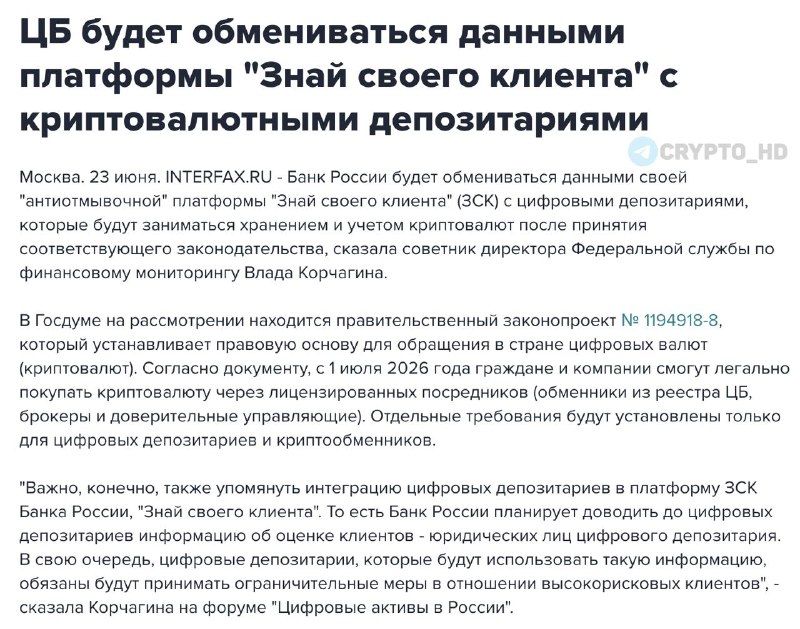
Digital depositories that store and account for Russian citizens’ crypto assets will connect to the Central Bank’s ZSK platform. That connection gives the CBR a direct channel for client risk data. High risk users could then lose access to some services. Anyone handling cryptocurrency will need full client identification, including beneficiary and ultimate beneficial owner details. Any digital asset operation above 1m rubles goes to Rosfinmonitoring, Russia’s financial intelligence unit. The “Travel Rule” is coming too, so crypto transfers will need sender and recipient data attached.
Here is the line. Russia is not merely adding a compliance box. It is tying crypto custody to a central bank risk system, which changes the character of the market. Most guides frame KYC as an anti-crime tool. That’s only half right. I don’t think this is only about illicit finance. It is also about control, and the ZSK link is the part that makes that hard to ignore.
Crypto investors have seen versions of this elsewhere. In the US, the SEC’s fights over staking and exchange listings have kept traders on edge for years. When the SEC sued Coinbase in June 2023 and alleged unregistered securities offerings, COIN shares fell more than 12% in one day. Regulation moves prices. That part is real. Russia’s rule change is local, but the signal is bigger: large governments want crypto inside their existing surveillance and reporting systems. Institutions may still enter, but they will ask for cleaner custody, heavier compliance, clearer rules, and fewer nasty surprises.
Why does this matter? Because the Travel Rule and the 1m ruble reporting line put bank style controls onto assets built to move without banks. Some users came to crypto for speed or privacy. Others came because they wanted fewer gatekeepers. Rules like these cut into both ideas, and I’ll be honest: pretending otherwise is marketing, not analysis.
Bitcoin has shrugged off plenty of geopolitical shocks before. During the January 2020 Soleimani strike, BTC gained about 8%. But this is different. Not a shock. A squeeze. Exchanges and depositories may face higher operating costs, and users will probably absorb some of that through fees, delays, stricter account checks, or narrower asset access. Counter to the usual advice, moving to a less regulated platform may not be an escape hatch. It usually means more risk, not more freedom. Larger platforms may also drop altcoins that create too much compliance trouble under the new rules, which could hurt liquidity in smaller tokens.
What this means
The CBR’s move says the quiet part plainly: governments do not want to watch crypto from the outside. They want it wired into the same monitoring systems they use for traditional finance. The link between digital depositories and the ZSK platform, plus automatic reporting above 1m rubles, points to a market where crypto is treated at least as strictly as bank money. Maybe stricter, in practice.
That will pressure exchanges and DeFi teams to tighten KYC and AML checks. Some of that may be unavoidable. Still, the direction is clear, and it is not exactly cypherpunk. Yes, this contradicts the old crypto promise of open access. Bear with me: more regulated crypto can still grow, but it usually becomes more centralized crypto. In Russia, the near term effect could be slower retail adoption and more caution from foreign firms considering local operations. That could weigh on sentiment around assets like ETH, which depends heavily on broad participation and network activity.
Watch the threshold. Investors should track trading volumes on exchanges that serve Russian users, especially around the 1m ruble line. Is this overkill? Not if activity starts clustering just below that number. That would suggest users are trying to avoid reports. Also watch whether major global exchanges change their Russian services or update compliance language around KYC and the Travel Rule.
The next global date worth watching is the Financial Action Task Force (FATF) plenary meeting in October. FATF often discusses virtual asset rules there, including the Travel Rule. If its guidance moves closer to Russia’s approach, this stops looking like a Russian outlier. It starts looking like the next compliance playbook.