















































PancakeSwap ATM/WBNB Pool Hack: $950,000 Stolen, DeFi Security Faces Another Test
Hackers stole $950,000 from the ATM/WBNB liquidity pool on PancakeSwap. Real money. Not a rounding error buried in a dashboard. My take: the ugly part is not just the size of the loss, but how familiar the pattern feels. DeFi can look clean, fast, and professional from the outside while one specific pool still carries a risk profile that users barely see until something breaks.
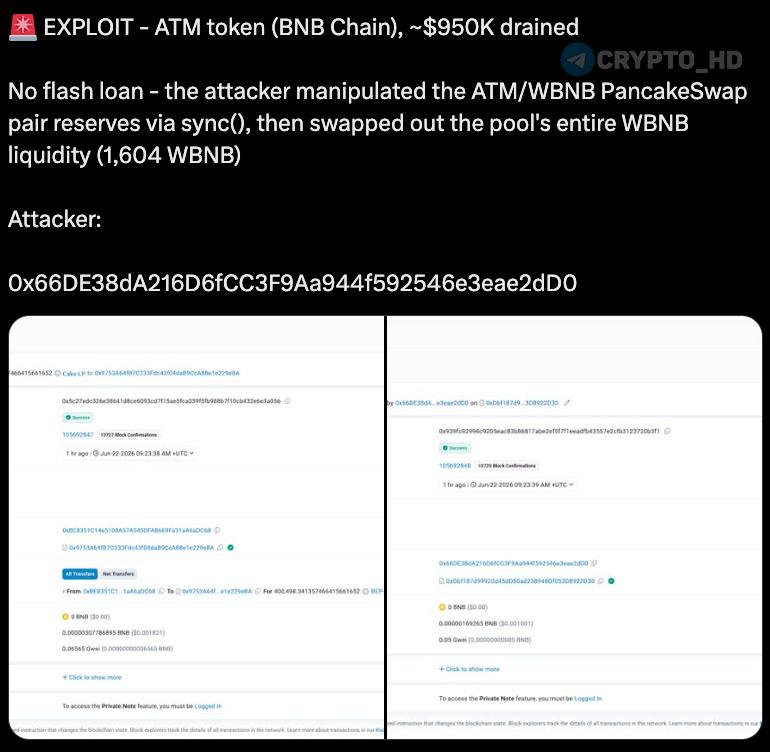
The attack hit the ATM/WBNB pool and drained about $950,000. The source does not explain the exact method. So, no, we should not dress up guesses as analysis and claim it was a contract bug, price manipulation, bad pool logic, or anything else. Most exploit write-ups rush to name the mechanism. That is only half useful when the public facts are thin. What we do know is simpler: liquidity providers in that pair took the loss. DeFi has been here before, loudly. Wormhole lost more than $320 million in February 2022, and that was only one of the larger cases from the last few years. Users do not need another glossy speech about “trustless finance.” The practical lesson is rougher: your money can disappear fast.
This PancakeSwap ATM/WBNB pool hack also lands during a tense period for crypto regulation, especially around regulation pressure. Regulators in the US, including the SEC, have already been pushing harder on crypto firms. The SEC’s actions against staking services, plus its lawsuits involving Binance and Coinbase, have made parts of the market more cautious. Why does this matter? Because a nearly $1 million exploit on a widely used decentralized exchange gives regulators an easy line of attack: DeFi users can lose funds, and nobody may be clearly accountable afterward. That could mean tougher compliance demands for projects. It could mean higher costs too. Those costs usually reach users through higher fees or lower yields. Sometimes they show up as fewer listed assets. We saw the same tone shift after FTX collapsed in November 2022: regulators got sharper almost overnight, centralized exchanges came under more pressure, and some tokens became harder to trade.
The hack may also affect macro flow into risk assets. Bitcoin is often described as a safe haven during stress in traditional finance, but I’ll be honest: that pitch gets harder when crypto keeps manufacturing its own emergencies. If an investor sees almost $1 million vanish from one pool, the next question is not academic. Why keep capital in this system? Some traders may rotate out of smaller DeFi tokens and into BTC or ETH. Others may leave crypto for gold, money market funds, or US Treasuries. Counter to the usual advice, the move is not always “risk off into Bitcoin.” Sometimes it is just risk off, full stop. During the March 2023 banking crisis, BTC rallied at first, but people still argued over its safe haven status. Hacks like this do not settle that argument. They muddy it.
What this means
The $950,000 PancakeSwap ATM/WBNB pool hack shows how uneven DeFi risk still is. A major platform name does not make every pool safe. Audits help. Community monitoring helps. Neither makes code immune to exploitation. Skip the branding comfort. For traders, the sharper risk sits in smaller pools, newer tokens, and pairs without deep liquidity. ATM could face selling pressure as holders rethink the token. The BNB Chain ecosystem may also turn more cautious for a while because PancakeSwap is one of its most visible venues.
The next thing to watch is PancakeSwap’s response. A useful post-mortem should explain what happened, how much was lost, whether any funds can be recovered, and what changes will follow. Is this overkill for one pool? No, because one pool exploit can become market narrative when the venue is big enough. Traders should watch ATM and WBNB price action. Liquidity withdrawals from related pools matter too. Regulatory comments matter as well. Yes, this sounds like a lot of weight to put on a single incident; bear with me. One hack will not rewrite DeFi policy by itself, but repeated losses make it easier for agencies to argue for tighter oversight. The next SEC statement or DeFi enforcement move could shape how this incident is remembered: as a contained pool exploit, or as another example in the case against loosely governed crypto markets.