
















































Esports World Cup Payouts Hint at a Crypto Opening as T1 Stumbles
The $1 million payouts at the Esports World Cup in early July 2026, along with T1’s rough early exit, point to something larger than a crowded tournament week. Serious money is moving through esports now. Crypto people should pay attention. Not because every tournament needs a token. Please, no. My take: the better signal is that esports already behaves like a digital economy, with global teams, online audiences, international payments, sponsor money, and fans who do not need a lecture on what a wallet is.
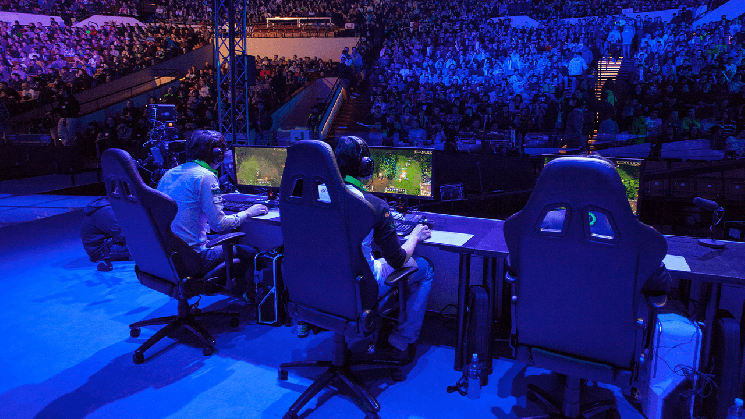
From July 8 to July 11, competitive gaming delivered two very different shocks. In Paris, the first Esports World Cup paid out major prize money and crowned new champions. In Daejeon, South Korea, T1, the defending League of Legends world champion, crashed out of MSI much earlier than expected. Why does this matter? Because the same week showed both sides of modern esports: huge capital inflows and brutal competitive instability. That combination is exactly where digital finance keeps finding openings.
The Esports World Cup opened at Paris Expo Porte de Versailles with more than $75 million in total prizes. Week 1 included championship events for Fatal Fury: City of the Wolves and Apex Legends. SNK’s revived fighter, Fatal Fury: City of the Wolves, came in with a $1 million prize pool. Natus Vincere’s Darkangel won the 32-player main event on July 11, beating Virtus.pro’s mi2ha4 in the grand final. Darkangel, from Mexico, earned $250,000 and 1,000 Club Championship points. For a game still trying to prove itself, that is not background noise. It is a launch signal. At the same festival, the Apex Legends Global Series put its Split 1 Playoffs inside the Paris event, and UNLIMIT beat ZETA DIVISION, giving a Japanese organization its first world-level Apex Legends title. That pulled more attention toward the Asia-Pacific scene, where the audience growth story is already hard to ignore.
While Paris got new champions, Daejeon got the end of a streak. T1 entered the $2 million MSI tournament as the defending world champion and clear favorite. After an unbeaten Play-In run, they lost 2-3 to Bilibili Gaming in the upper bracket. Then came July 8. G2 Esports, representing Europe, knocked them out 3-1. This was not one lucky fight deciding a series. G2 controlled the map. They drafted with nerve. BrokenBlade’s Kled top lane game was the kind of pick that makes analysts sound smarter after the fact. I’ll be honest: T1 looked less like a dynasty having an off day and more like a team suddenly forced to update its operating system. The loss put T1 and Faker outside the top four at an attended major international LAN for the first time. T1 tied for fifth and sixth and took home about $160,000. For a team used to setting the standard, that is a hard reset before the LCK summer split and the 2026 World Championship.
This is where crypto starts to make sense. Prize pools like $1 million for Fatal Fury and more than $75 million across the EWC are not just trophy money. They are large money flows inside a market that already lives online. Most guides say the crypto-esports overlap is about fan tokens. That is only half right. The cleaner argument is payments and treasury: stablecoins for cross-border settlement, teams keeping part of their winnings in Bitcoin or ETH, and sponsors paying in assets that do not crawl through bank rails for a week. I am not saying every esports org is about to become MicroStrategy. That would be silly. But MicroStrategy showed how treasury policy can become a market signal: it held 214,400 BTC as of April 29, 2024, worth more than $13.5 billion when BTC traded around $63,000. Esports teams have global fans, online revenue, sponsor money, and payment problems across borders. Stablecoins fit that setup almost too well. If even a few large organizations start holding digital assets or accepting prize payouts that way, it could create another pocket of demand for BTC, ETH, USDT, and USDC. ETF inflows helped push BTC past $73,000 in March 2024. Esports will not move the market on its own. It can still matter.
The other obvious link is volatility. T1 can look unbeatable one week and beatable the next. Crypto does the same thing, only with worse candles. One announcement can move billions. The SEC approved spot Bitcoin ETFs in January 2024, and BTC moved from below $45,000 to above $49,000 within days. When the CFTC sued Binance in March 2023, BTC fell from about $28,000 to $26,000. Esports has its own kind of whiplash: one draft, one patch, one upset, one sponsor panic call. Prize money, rankings, sponsor value, and fan mood all move. Yes, this sounds like I am comparing Faker’s bracket run to macro liquidity. Bear with me. The useful comparison is behavioral, not moral: the teams that last usually have discipline, strong systems, and people who do not panic after one bad series. Crypto projects are not so different. Projects with clear uses, decent security, active users, and boring execution tend to outlast the ones running on noise. That makes esports a decent place to test tokenized fan perks, NFT collectibles that are not just useless JPEG clutter, and even DAO-style experiments around team communities.
What this means
Esports is turning into a large global business, and its audience already lives online. That makes crypto feel less bolted-on here than it does in plenty of other industries. The prize pools are big. The payments cross borders. The fans understand digital ownership, even if many of them are rightly allergic to bad token launches. Counter to the usual advice, the first serious adoption may not look flashy at all. It may look like stablecoin invoices, treasury notes, and sponsorship contracts with settlement terms nobody bothers to tweet about. Some teams may try Bitcoin exposure. Others may begin with sponsorships, which is probably the less reckless route. Either way, USDT, USDC, BTC, gaming tokens, and gaming-focused Layer 2 networks could benefit if esports money starts moving on-chain in a serious way.
The next thing to watch is dull but important: sponsorship language. Is this overkill? For a market with more than $75 million in EWC prize money, no. If a major esports organization announces crypto payouts, a treasury allocation, or a real blockchain partner, that matters more than another vague “Web3 fan experience.” Watch gaming-linked tokens and Layer 2 projects such as Polygon (MATIC) and Immutable X (IMX) around major esports announcements. Also watch the Esports World Cup’s Club Championship points system. If those points ever become tokenized or tied to a blockchain settlement layer, that would say far more about adoption than a logo on a jersey.