
















































Optimism token decline analysis: why OP struggles despite L2 dominance
The Optimism (OP) token powers one of Ethereum’s biggest Layer 2 blockchains, but its price has been under pressure. That’s the awkward part. The network can look healthy while the chart looks terrible. I’ll be honest: that split is exactly what makes OP uncomfortable to analyze. For crypto investors hunting for “x’s” (multiples), OP is a reminder that good tech does not automatically make a good trade. It really doesn’t.
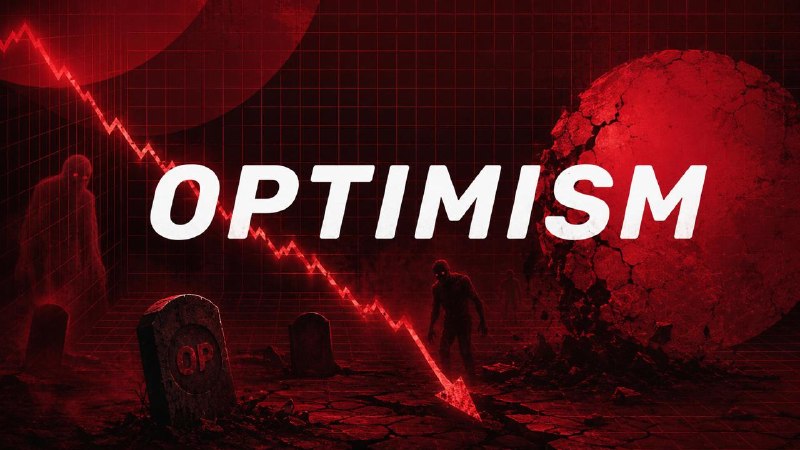
A recent wire service analysis, which we’ve reviewed, asks the question bluntly: “Why is the Optimism token dying?” The report calls Optimism the “largest L2 ETH” and describes it as “the most successful Layer 2 blockchain in the Ethereum ecosystem,” mostly because of the OP Stack. Fair enough. The tech matters. Most guides stop there. That’s only half right. The report then gets to the part holders care about: “why then does the OP token not grow and continue to zero out?” That line hurts because it attacks one of crypto’s favorite assumptions, that strong infrastructure should eventually show up in the token price. Sometimes it does. Sometimes the chart just keeps drifting while everyone waits for the thesis to work.
OP’s problem is not only about OP. Network activity can improve while the token still bleeds. Plenty of altcoins have lived through that, but OP makes the problem especially visible because the product story is not weak. Bitcoin (BTC) recently traded around $61.4K and held up better than many smaller names, while tokens like OP struggled to build momentum. When institutions get cautious, they usually stay closer to BTC and ETH. L2 tokens sit further out on the risk curve, so they tend to get hit earlier. Why does this matter? Because OP does not need a broken product to fall. Inflation worries, slow rate cuts, and the Federal Reserve’s cautious tone can do enough damage on their own. Capital moves away from higher beta crypto bets, or leaves crypto altogether. Buyers can simply vanish.
Regulation adds more drag. Optimism is not getting the same attention as centralized exchanges or some staking products, but the whole market still feels the pressure. My take: OP gets punished by association even when the headline is not about OP. If investors are unsure how tokens may be classified later, or what compliance rules might come next, they hesitate. That hesitation matters. Earlier this year, several SEC related headlines helped knock many altcoins down 10-15% within days, even while BTC looked steadier. For OP holders, the question is simple: can Optimism’s tech advantage beat the market’s risk off mood, or does OP stay stuck until the broader crypto bid returns?
What this means
OP’s weakness shows how traders are starting to judge L2 tokens. A busy chain is not enough anymore. Good adoption stats are not enough either. Counter to the usual advice, I would not start with transaction counts here. Start with value capture. Investors want to know how the token captures value, not just whether Optimism has useful infrastructure. Governance alone feels thin when the price keeps sliding. Transaction fee discounts do not excite people if they cannot see a clear link between network growth and token demand. Skip the victory lap.
For OP to get those “x’s,” one of two things probably has to change. The market needs to move back into risk on mode, or Optimism needs tokenomics that give holders a clearer claim on the network’s success. Yes, this partly contradicts the clean “great networks win” story. Bear with me. I would watch for new token utility or staking first, then any revenue sharing model tied to OP. ETH matters too. A strong ETH rally, whether from upgrades or more institutional buying, could pull L2 tokens with it. Is this enough by itself? Probably not, but it can change positioning fast. The next FOMC meeting also matters because a softer rate message could give altcoins some room to breathe.
FAQ: Optimism token performance
Q: Why is the Optimism token (OP) struggling despite the network’s success?
A: OP is struggling because network success and token price do not always move together. The broader market has been cautious, risk appetite has weakened, and regulatory uncertainty has made investors less willing to buy smaller crypto assets. In plain terms, Optimism can be useful while OP remains a hard sell.
Q: What is the “OP Stack” and how does it relate to Optimism’s success?
A: The OP Stack is Optimism’s modular framework for building Layer 2 blockchains that can scale and work with each other. The wire service report points to it as a major reason Optimism is viewed as one of Ethereum’s stronger L2 projects. I agree with that part; the OP Stack is the strongest piece of the bull case.
Q: How do macroeconomic factors affect the OP token’s price?
A: Inflation concerns and the Federal Reserve’s slow approach to rate cuts put pressure on speculative assets. OP falls into that bucket. When traders get defensive, they often move away from higher risk altcoins and into BTC, ETH, cash, or nothing at all.
Q: What role does regulation play in the OP token’s underperformance?
A: Regulation creates uncertainty around how tokens may be treated later. Even if Optimism is not the direct target, unclear rules can keep new money away. That caution adds to the pressure already coming from macro conditions.
Q: What could help the OP token achieve significant price appreciation (“x’s”)?
A: OP likely needs either a friendlier market for altcoins or stronger tokenomics. New token utility, staking, or revenue sharing could help if they tie the token more directly to Optimism’s network growth. My take: without that link, traders will keep treating OP as optional beta rather than a must-own asset.