















































Fed chairman testifies on monetary policy: macro flow impact on crypto
On July 14, Fed Chairman Kevin Warsh is scheduled to testify before the U.S. House Financial Services Committee with a monetary policy report. Crypto traders will be watching. Closely. Fed comments can flip the mood quickly, especially when BTC and ETH are already trading as if every line out of Washington might move the chart. My take: this is less about the speech itself and more about how fast positioning changes after it.
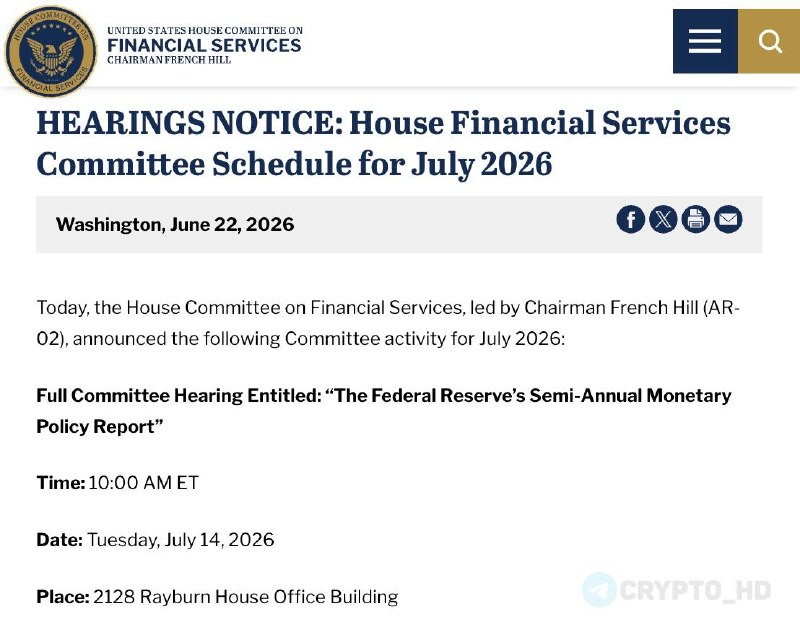
Warsh’s July 14 testimony is a regular item on the financial calendar, but that does not make it harmless. His report to the House Financial Services Committee will cover monetary policy (ДКП), the Fed’s read on the economy, and where policy may go next. Markets pick these appearances apart. Sometimes too much, honestly. One sentence about inflation can hit first. A line on jobs data can hit harder. By the afternoon, that can turn into a full risk-on or risk-off move.
For crypto traders, the main issue is macro flow. The Fed’s stance on rates, inflation, and quantitative easing affects how much liquidity is available for risk assets. Why does this matter? Because crypto still behaves like a high-beta liquidity trade when policy expectations move fast. When the Fed sounds hawkish and money gets tighter, traders often cut exposure to speculative assets, including crypto. That happened in early 2022. Bitcoin (BTC) traded above $48,000 in March, then dropped below $20,000 by June as rate hikes pulled capital out of higher-risk trades. When the Fed sounds dovish, crypto can catch a bid. In late 2020, easy-money policy helped BTC climb from around $10,000 to more than $29,000 by year-end.
There is also a regulation pressure angle, even if it is not the main event. Most previews will treat this as a clean macro story. That’s only half right. Warsh is testifying about monetary policy, but the House Financial Services Committee has real influence over U.S. crypto rules. If he talks about financial stability, market oversight, risks outside the banking system, or nonbank leverage, traders may treat it as a hint of future pressure on exchanges such as Coinbase (COIN) or on stablecoins. Maybe that is reading too much into it. Maybe not. I would not dismiss it. The market has done this before. Uncertainty around the SEC vs. Ripple case weighed on XRP for long stretches, even when the broader crypto market was trying to recover.
What this means
The testimony could make for a choppy session. If Warsh points to stubborn inflation or faster quantitative tightening, crypto may sell off with other risk assets. If he sounds more patient and keeps the focus on economic support, BTC could make another push toward the $70,000 area, while ETH may try to take back levels above $4,000. Simple setup. Messy reaction.
The wording matters. Counter to the usual advice, I would not only watch the prepared remarks. Traders should watch what Warsh says about inflation targets and employment data, then compare that with the timing of any policy move he hints at. Is this overkill? For a volatile BTC and ETH session around Fed testimony, no. The first few hours after the July 14 testimony may say more than the prepared remarks. I would also keep the CME FedWatch Tool open for shifts in rate expectations. On the chart, BTC’s reaction around its 200-day moving average and ETH’s behavior near $3,000 support should show whether buyers still have conviction after the report. I’ll be honest: if those levels fail cleanly, the macro read probably matters less than the tape.