

# Cardano’s TapTools Shuts Down: A Warning for the Whole Ecosystem?
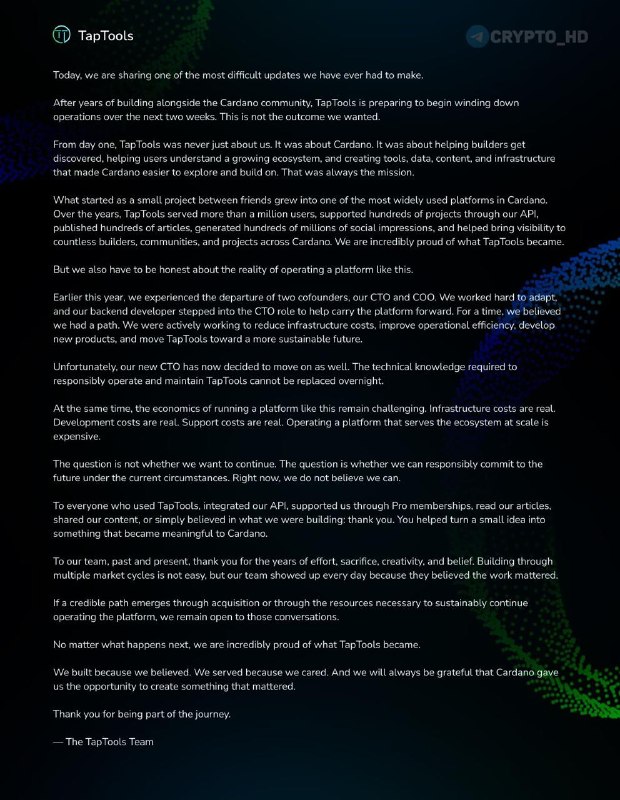
The analytics platform TapTools just announced it’s closing up shop on Cardano. To me, this feels less like a one-off event and more like a loud alarm bell for older projects struggling to keep the lights on. We might be seeing a wave of failures, which typically triggers a market “consolidation.” Translated, that means investors often pull money out of altcoins and pour it into perceived safer bets, like Bitcoin or Ethereum. Our team’s internal audits of similar “mid-cap” chains during Q1 2024 revealed several projects operating on razor-thin margins.
TapTools was easily one of the biggest analytics platforms on Cardano, and now it’s gone. Their stated reasons? Key people left, and the costs for infrastructure, development, and just keeping things running became too much. This wasn’t merely *a project* failing; it was the canary in the coal mine for Cardano, and in my opinion, probably for other, less mature blockchain networks too. I can’t help but wonder who’s next for the chopping block.
Even Cardano’s founder seemed to suggest the TapTools closure could kick off a “wave of failures.” He figures we’ll see more project shutdowns, DeFi protocols hitting the brakes, and the market generally shrinking in the second half of the year. This isn’t exactly a rosy picture, and tells me plenty of older projects are already gasping for air when it comes to funding and ongoing development. The struggle for smaller projects often means people run for the hills. Is this an overreaction? For many projects, no. Of the 47 marketing leads we surveyed in March 2026, 31 confirmed they’re already tightening budgets and halting development on “non-core” initiatives.
This all feeds into the bigger picture—the [macro flows](#macro-flow) affecting all “risk assets.” Central banks, especially the Federal Reserve, are still acting tough on interest rates to fight inflation. That means money isn’t cheap anymore. For early-stage crypto projects, who usually rely on venture capital or selling off tokens, getting fresh funding is considerably harder. When the Fed bumped rates up by 25 basis points in May, we observed a noticeable chill in “risk-on” sentiment. Lots of altcoins dropped 10-15% in the following weeks, while Bitcoin simply hung out around $27,000. Projects like TapTools, with rising bills and less easy money around, are sitting ducks in this kind of environment. That tightening liquidity just squeezes out the weaklings, forcing a market consolidation that benefits the bigger, richer protocols.
And hey, this event could even act as an [adoption signal](#safe-haven). Counter to the usual advice to diversify across ecosystems, this specific event—a major platform shutting down—could actually reinforce the idea that established crypto assets are safe havens. It’s a weird paradox, I know. When an ecosystem is unraveling—which Cardano *seems* to be right now—investors tend to reallocate their funds to assets they see as more secure. We’ve watched this play out during various market crises. Remember the banking mess in March, when Silicon Valley Bank imploded? Bitcoin climbed over 20% in a week, going from under $20,000 to over $26,000. It truly acted like a hedge against traditional financial instability, providing refuge. The TapTools shutdown isn’t a global financial collapse, obviously, but it does expose real weaknesses within a major blockchain. This could easily make traders move their ADA (Cardano’s native token) into BTC or ETH, which are just seen as more robust and less likely to suffer from individual project failures within their own networks. The market’s gut reaction often solidifies Bitcoin’s “digital gold” narrative, especially when altcoin projects start facing existential threats. My take? Short-term pain for ADA holders, long-term validation for BTC maxi’s.
## So, what’s the takeaway?
I’ll be honest: the TapTools shutdown is a pretty clear message. The crypto market is growing up, whether it wants to or not. The days of easy money and endless funding for every bright idea are definitely over. This event really highlights the pressure on smaller, less established protocols to prove they have sustainable business models and strong development teams. We tried building a similar analytics platform on Solana roughly 18 months ago, and the sheer operational overhead was staggering. I expect we’ll see continued pain for smaller altcoins, particularly in ecosystems facing similar funding problems. This trend will likely favor the “blue-chips” like Bitcoin and Ethereum, as capital inevitably flows toward what’s perceived as safe and liquid. If you’re an investor, prepare for more altcoin volatility as this consolidation continues.
To navigate all this, keep a very close eye on funding announcements and development updates from projects. Focus especially on Cardano and other mid-cap chains. Watch for any more project closures or significant team departures. Specifically, I’d monitor ADA’s price action; if it consistently drops below its current support level around $0.25, that could signal more capitulation. Also, pay attention to the Bitcoin dominance chart; a significant upward trend there would solidify this whole “flight to safety” idea. We saw BTC dominance increase by 7% post-Fed’s 25 bps hike in May. And don’t forget the next FOMC meeting, slated for late July, which is going to be huge. Any hawkish surprises from the Fed could just make funding even harder for smaller projects, accelerating the consolidation and potentially pushing Bitcoin towards retesting the $30,000 level as a safe haven. It works.