
















































New African Virus Outbreak Congo: A Black Swan for Risk Assets?
A fast-moving virus outbreak in the Democratic Republic of Congo has killed at least 14 people in 19 days. Local authorities put the number at 20. Markets notice that. If the illness spreads outside the affected area, it could trigger a risk-off move, dent crypto’s recent rally, and test Bitcoin’s safe-haven pitch again. I’ll be honest: the market angle is secondary to the human one, but traders will still price it. Some patients reportedly died less than 24 hours after symptoms started. That part sticks.
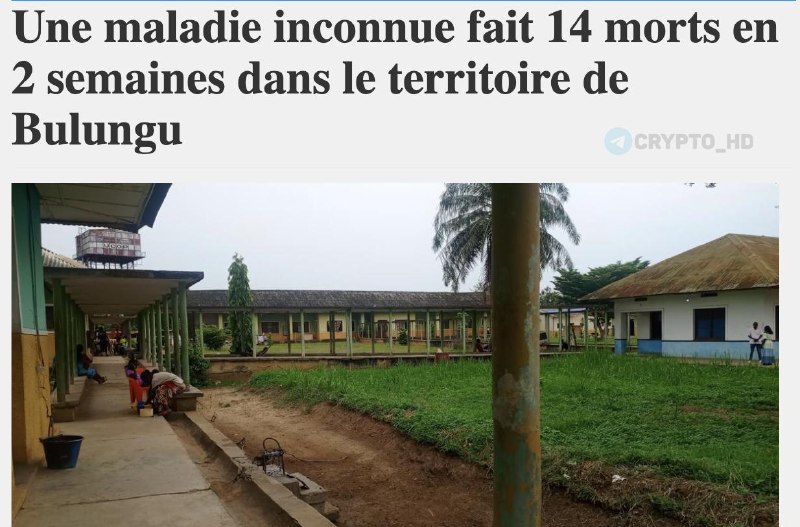
The Democratic Republic of Congo is dealing with an outbreak that local officials worry could get much worse. Over the past 19 days, at least 14 people have died, while local authorities have reported 20 deaths. Symptoms include headache, vomiting, abdominal pain, and knee pain. The alarming part is the speed, not just the count. Some victims died within a day of first showing symptoms. Residents have already left affected villages. That says enough. Medical teams have taken samples for lab testing, but they still do not know the cause. Why does this matter? Because until the cause is identified, officials are fighting fear, movement, rumors, and the illness itself.
For now, this looks like a local health crisis. Most market notes would stop there. That’s only half right. Markets may not keep treating it that way if the story changes. The obvious comparison is early 2020, when the first COVID-19 shock sent Bitcoin (BTC) down more than 50% in one day, from $7,900 to $3,800 on March 12, 2020. Bitcoin recovered later and then rallied hard, but the first move was brutal. In a panic, investors usually sell what they can. Gold rose about 2% in the week after the initial COVID-19 market crash, while BTC traded more like high-beta tech than a haven. Then central banks flooded the system with liquidity, and Bitcoin’s story shifted into inflation hedge and digital store of value. My take: if this Congo outbreak gets worse, the sequence is probably selling first, analysis later. Altcoins would probably take the harder hit. Bitcoin might get another look only after traders decide whether this is a local tragedy or a systemic risk. Watch the spread beyond the DRC. That is when markets stop shrugging.
A health scare would also feed into macro flows and central bank expectations. The Federal Reserve has recently paused rate hikes and is still trying to balance inflation against economic weakness. Counter to the usual advice, a wider pandemic would not automatically mean “bullish liquidity” for crypto. It could push central banks to soften their stance, delay cuts, or bring back liquidity support, depending on what happens to growth and inflation. Crypto usually likes loose money. During the COVID-19 stimulus boom in 2020 and 2021, Ethereum (ETH) climbed from under $100 to more than $4,800 as capital chased growth. But there is a catch. If investors see the outbreak as a hit to global demand, they may dump volatile assets before any policy help arrives. Is that overthinking it? No, because BTC, ETH, stablecoin demand, DeFi activity, and altcoin liquidity can all move before policymakers say a word. Stablecoin demand could jump. DeFi activity could thin out. Altcoin liquidity could vanish fast if macro traders decide this is no longer just a local story.
What this means
The outbreak in the Democratic Republic of Congo is a low-probability risk with an ugly upside tail. That sounds cold, but markets really do think that way. I do not like reducing an outbreak to a chart catalyst, but risk desks will do exactly that. It is local for now, though the reported speed and fatality rate make it worth watching. Crypto investors should expect more volatility if the situation worsens, especially in smaller altcoins. Yes, this cuts against the clean “Bitcoin is a haven” story. Bear with me. The first move would likely be broad selling, with Bitcoin (BTC) judged against gold and cash rather than crypto talking points.
What to watch next: Track official updates from the World Health Organization (WHO) and the Centers for Disease Control (CDC) on identification, transmission, and containment. Any sign of international spread would matter. Simple as that. In crypto, watch BTC around the $60,000 support level. A clean break below that area could point to a deeper correction. CME Bitcoin Futures open interest and funding rates should also show whether institutions are cutting risk or leaning into the move. The next FOMC meeting on [insert next FOMC date, e.g., December 13] matters too. If health concerns push policymakers toward a more dovish tone, risk assets may get some offset to the fear trade.