
















































US inflation data crypto market hit by $300 billion stock rout
US stock market inflation is the market version of a simple problem: rising U.S. consumer prices start dragging equities lower. Traders see a tougher Fed, higher yields, and less patience for risk. That is the setup.
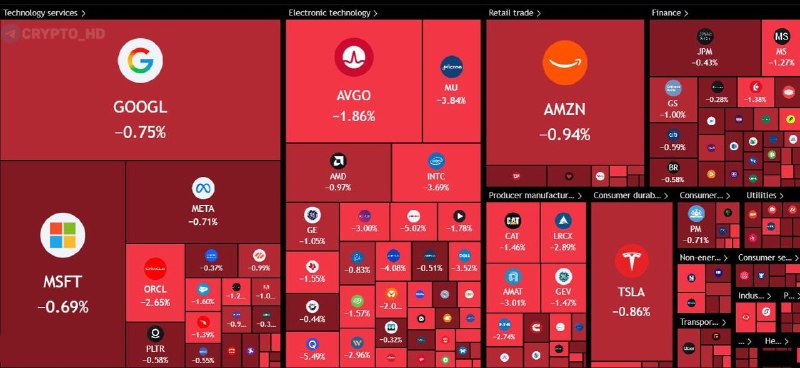
The U.S. stock market lost $300,000,000,000 at the open on Tuesday, May 12, 2026, after inflation rose, putting the us inflation data crypto market trade under pressure again. I’ll be honest: for crypto investors, this is not a subtle signal. Hot inflation keeps rate expectations tight, and tight rate expectations usually hit risk assets before Bitcoin gets much room to argue its longer-term money-printing case.
The source report is thin. Still, the main fact lands hard: U.S. stocks dropped $300,000,000,000 at the open, with rising inflation named as the trigger. That places the move inside the macro chain traders check after every CPI data crypto shock. Inflation first. Then rate expectations, dollar liquidity, Treasury yields, and appetite for high-beta trades.
The U.S. Bureau of Labor Statistics defines the Consumer Price Index as the average change over time in prices paid by urban consumers for a basket of goods and services. Dry definition. Real market punch. Why does this matter? Because a CPI surprise can reprice Fed expectations, Treasury yields, and liquidity before the trading day has even settled into a pattern.
BTC and ETH often behave like long-duration risk assets when inflation surprises the market. On March 12, 2020, BTC fell more than 37% during a broad liquidity panic. In 2021, it ran to about $69,000 while easy money fed risk appetite. My take: that contrast is the whole story for this moment. Rising inflation can pull money out of speculative assets, even while long-term Bitcoin holders keep saying fixed supply wins over several years.
The macro-flow angle comes first. If us stock market inflation fears push traders back toward higher-for-longer rate assumptions, BTC, ETH, and COIN can all get hit by tighter liquidity. Most crypto commentary jumps straight to the hedge narrative. That is only half right. Crypto often moves faster than equities because leverage clears out quickly on perpetual futures, especially around CPI data crypto releases and the U.S. market open.
The Federal Reserve says it makes policy around maximum employment and stable prices. In market terms, stubborn inflation keeps bets on restrictive policy alive. Those bets can weigh on growth stocks, crypto equities, BTC, and ETH. Simple, but brutal.
The second angle is Bitcoin’s safe-haven pitch. BTC gets called digital gold constantly. The market does not always treat it that way when inflation shocks land. After the January 2020 Soleimani strike, BTC rose about 8% over the next few days, so geopolitical stress can bring in buyers. This setup is different. The pressure today is inflation, not war headlines, sanctions, or a flight from banks.
The safe-haven argument is not dead during an inflation shock. It just has to earn the trade. Yes, this sounds like it contradicts the risk-asset point above. Bear with me. If rising prices weaken trust in fiat purchasing power, some investors may still move toward BTC over time. But if traders read the $300,000,000,000 U.S. equity loss as a liquidity event, BTC may trade like Nasdaq first and like a monetary hedge later.
The source did not include a quote, an official CPI figure, a Fed comment, a company statement, or an analyst estimate. That matters more than it looks. I would not call this a new crypto-specific catalyst. The cleaner read is narrower: inflation risk just got louder for BTC, ETH, and crypto equities at the same time U.S. stocks opened with a $300,000,000,000 loss.
What this means

An inflation-driven stock rout means traders are pricing risk assets through interest rates and liquidity, not only through crypto fundamentals. Skip the purity test. This is macro first.
Today’s $300,000,000,000 opening hit says inflation is still the main risk hanging over speculative markets, including BTC and ETH. If traders treat the move as a rate-pressure event, BTC could face selling into nearby liquidity zones. ETH may stay more exposed to risk rotation because it trades partly like money and partly like a high-beta tech asset. Is that overcomplicating ETH? Not really. That split identity is exactly why it can get squeezed from both sides.
CME Group says futures positioning can show how institutional traders express expectations across major asset classes, including Bitcoin futures. For crypto investors, CME BTC futures positioning is worth watching. We do not need a grand theory here. It may show whether this inflation shock is leading to hedging, forced deleveraging, dip-buying, or a fast reset after the open.
Watch the next U.S. CPI release, the next FOMC decision, CME BTC futures positioning, Treasury yields, and the U.S. equity open after today’s inflation shock. For BTC, the level to watch is the nearest major round-number support below spot. COIN can also work as a listed-market proxy for whether crypto risk appetite is recovering or still following the U.S. stock market inflation trade lower. Counter to the usual advice, this is not just about the Bitcoin chart.
FAQ
What is US stock market inflation?
US stock market inflation means rising consumer prices are pressuring equities through higher rate expectations, tighter liquidity, and weaker demand for risk.
Why does inflation affect crypto prices?
Inflation affects crypto prices because CPI surprises can shift expectations for Fed policy, Treasury yields, and dollar liquidity. BTC and ETH often weaken when traders expect tighter financial conditions.
Does Bitcoin always rise during inflation?
No. Bitcoin can benefit from long-term worries about fiat purchasing power, but during sudden inflation shocks it often trades like a risk asset. That distinction gets skipped too often.
Why did the stock market rout matter for crypto?
The $300,000,000,000 stock market loss mattered for crypto because it showed broad risk appetite shrinking. BTC, ETH, and crypto-linked equities can all take a hit when investors cut exposure to speculative assets.
What should traders watch next?
Traders should watch the next CPI release, the next FOMC decision, CME BTC futures positioning, Treasury yields, and the U.S. equity open. Those signals should show whether this is a quick shock or a wider liquidity repricing.