
















































Bitcoin price drop triggers $170M+ in long liquidations
A “Bitcoin price drop liquidation” happens when an exchange force-closes a leveraged trade after Bitcoin moves the wrong way. In this case, long traders were positioned for Bitcoin to rise. It did not. Bitcoin fell instead, and the exchange engines did what exchange engines do: they closed trades that no longer had enough margin behind them.
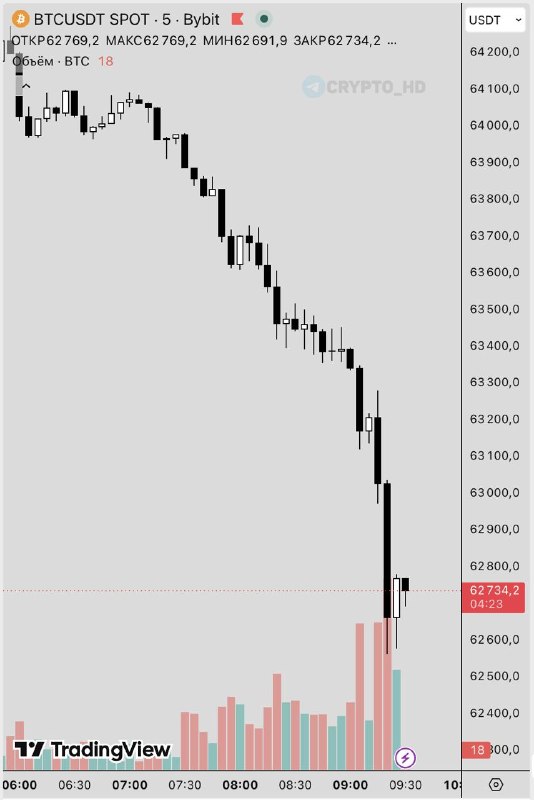
Bitcoin dropped below $63,000, and more than $170,000,000 in long positions were liquidated in one hour. Fast. Painful. The trap was leverage. My take: the price move mattered, but the borrowed money made it violent. A spot trader can sit through a red candle. A leveraged long near the margin line often cannot.
The hit was ugly for leveraged longs. Once Bitcoin slipped under $63,000, liquidations stacked up quickly, with more than $170,000,000 wiped out in about 60 minutes. That is not just a bad candle for anyone using heavy leverage. It is the kind of move where a small drop turns into forced selling. Why does this matter? Because forced selling can push price lower even when the first move was not that large. I have seen this setup enough times to be wary of it: price breaks a level everyone is watching, stops hit, liquidations fire, and then the move starts feeding itself.
This also matched the market mood, though not in the neat way Bitcoin debates usually frame it. Most guides say Bitcoin is either a hedge or a risk asset. That is only half right. When stocks look shaky or traders start worrying about rates, Bitcoin often gets treated like another risk asset. That annoys Bitcoin purists, and honestly, I get why. But it keeps happening. Bitcoin can trade like a hedge during political stress. It can also move with tech stocks and growth trades when risk is being cut. A drop that triggers $170,000,000 in liquidations suggests some investors were moving fast. Maybe it was macro nerves. Maybe traders were bracing for tougher Fed language. Or maybe too many longs were leaning on the same $63,000 floor. Whatever started it, crowded long trades paid the price.
The adoption story gets uncomfortable here. Spot Bitcoin ETFs helped bring more institutional money into the market, but this liquidation wave shows that speculative leverage still has real influence. Yes, that sounds like it contradicts the institutional adoption narrative. It does, a little. Companies, funds, or government-linked investors considering BTC will notice a market that can flush out more than $170,000,000 in an hour. Big liquidations can spook newer buyers too. I’ll be honest: the long term Bitcoin case may still hold, but the market can still act like crypto. Fast in one stretch. Thin in another. Harsh when leverage gets crowded.
What this means
“Market implications” means what this liquidation wave may do to Bitcoin trading, investor confidence, and the wider crypto market after a sudden price break.
The $170,000,000 liquidation shows that leverage still has a strong grip on Bitcoin trading. The bullish case has not disappeared. Short term trading can still get messy around watched levels like $63,000. Is this overkill for a single price break? No, because positions can vanish in minutes when the market moves against heavy leverage. BTC remains sensitive to chart breakdowns and funding conditions. It also still reacts to the wider mood across risk assets.
Next, watch whether Bitcoin can climb back above $63,000 and hold it. If it cannot, traders may start looking closer to $60,000 for support. Counter to the usual advice, I would not watch price alone here. Inflation data and central bank comments matter because they can change how much risk investors want to hold. CME Bitcoin futures open interest is worth watching. Funding rates are too. Falling open interest or negative funding would suggest the market is still clearing out leverage.
FAQ
What is a long liquidation in cryptocurrency?
A long liquidation happens when an exchange automatically closes a leveraged position that was betting on a price rise because the asset has fallen too far and the trader no longer has enough margin. Simple version: the trade ran out of room.
How much Bitcoin was liquidated in this event?
Market data showed more than $170,000,000 in Bitcoin long positions liquidated within one hour during the price drop.
What caused the Bitcoin price to drop below $63,000?
There was probably no single cause. The drop likely came from market volatility, weaker risk appetite, and technical selling after Bitcoin broke below $63,000, a level traders were watching closely.
What are the risks of leveraged trading in Bitcoin?
Leveraged Bitcoin trading can turn a small price move into a large loss. If the trade moves too far against the position, the exchange can close it completely. Skip the fantasy math. Leverage cuts both ways.
How do Bitcoin liquidations affect market sentiment?
Liquidations can make traders more nervous and add selling pressure. They also remind newer investors that Bitcoin can move hard and fast.
Is this common in the crypto market?
Large liquidations are common in crypto, especially when Bitcoin makes a sharp move and leverage is crowded on one side of the trade.
What should traders do to avoid liquidation?
Traders can use less leverage. They can also set stop losses and keep enough margin in the account to survive normal Bitcoin swings. My bias is boring here: survival beats squeezing a little more size out of the trade.
Why did the $63,000 level matter for Bitcoin?
The $63,000 level mattered because many traders were watching it as support. Once Bitcoin fell below it, selling and liquidations picked up.
How does macroeconomic data influence Bitcoin liquidations?
Inflation reports and central bank comments can change risk appetite. When investors cut exposure to volatile assets, Bitcoin leverage can unwind quickly.
What is the difference between a long and a short liquidation?
A long liquidation happens when price falls and traders betting on a rise are forced out. A short liquidation happens when price rises and traders betting on a fall are forced out.