
















































Iran Sanctions Evasion Binance Report Puts Crypto Compliance Back on Traders’ Screens
A new Wall Street Journal report says Iranian networks used Binance as a major route around sanctions, turning “iran sanctions evasion binance” into a market issue, not just a legal one. The numbers are not small. The Journal reported $850 million tied to Babak Zandjani over two years, plus about $830 million through Zedcex’s corporate Binance account. I’ll be honest: that is not the kind of story traders can file under legal noise and forget. Enforcement pressure can move from a headline into exchange liquidity, token multiples, and the discount investors apply to COIN, BTC, and ETH.
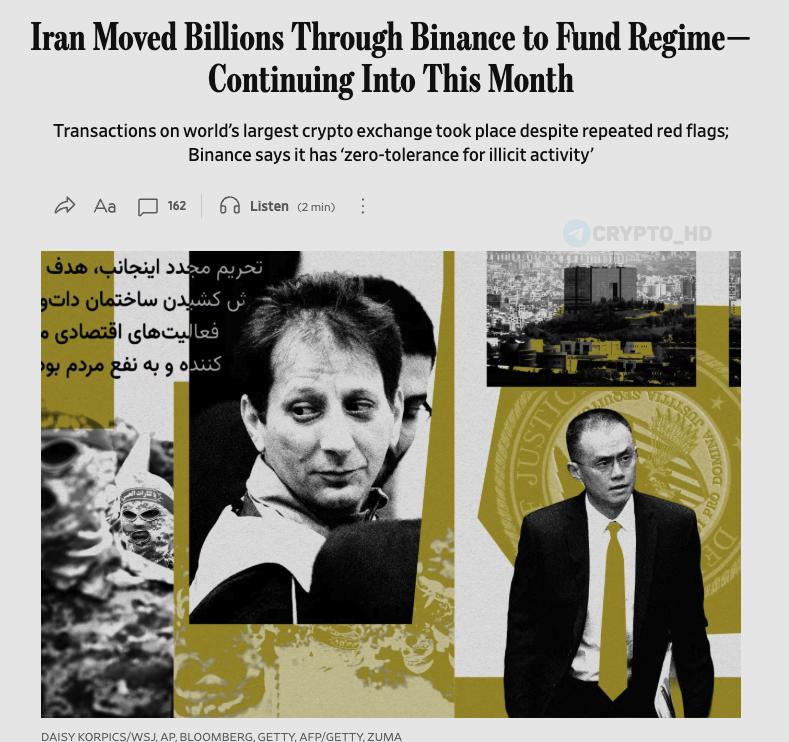
The report names Iran, Binance, Babak Zandjani, Zedcex, and structures tied to the Iranian regime and the IRGC as part of the alleged sanctions evasion network. The Wall Street Journal describes Zandjani as an “anti-sanctions” operator. It says Binance internal compliance reports showed he handled $850 million in transactions over two years, mostly through one trading account. Separately, the Journal says Zedcex, a crypto company linked to Zandjani, processed about $830 million through a corporate Binance account. Some of those flows may have connected to Iranian oil payments and later financing for IRGC-linked structures. My take: the Nobitex detail matters more than it looks at first glance, because it makes this read less like a single-account problem and more like a network map.
The reported “binance iran sanctions” risk matters because Binance is one of crypto’s main liquidity venues. Binance is not a fringe exchange sitting outside the real market. It is deep in spot and derivatives trading. When a report ties Binance accounts to $850 million and about $830 million in alleged sanctions-linked flows, compliance desks, regulators, banking partners, and prime brokers have to revisit counterparty risk. Most guides would say the risk is mostly regulatory. That’s only half right. The market risk shows up when liquidity providers widen spreads before anyone knows what enforcement actually looks like.
For Bitcoin (BTC), the problem is not that Bitcoin caused this. The problem is whether another sanctions story gives policymakers a reason to tighten exchange surveillance, stablecoin monitoring, and cross-border KYC rules. BTC often trades like macro collateral. Still, it depends on fiat ramps and centralized venues for price discovery. Why does this matter? Because a cleaner protocol narrative does not protect traders from a messy exchange layer. If compliance teams get more cautious after this WSJ report, liquidity can thin right when traders need it. That is when crypto sanctions compliance stops being a legal footnote and starts showing up in price.
The safe-haven case for crypto gets awkward here, because a sanctions-evasion report can make Bitcoin look useful and exposed at the same time. Iran, oil payments, sanctions, and IRGC-linked financing put crypto back in the geopolitical-risk conversation. In a normal risk-off move, gold usually gets the cleaner bid. We saw that pattern repeated in plenty of desks’ playbooks during earlier Middle East risk scares. BTC is harder to read. Censorship resistance helps the story; exchange chokepoints weaken it. That is the uncomfortable part. Borderless settlement has obvious demand. The most liquid trading stack still runs through named accounts, corporate venues, compliance files, and bank relationships.
That is why BTC and ETH traders should watch liquidity instead of repeating slogans. If headlines like this push policymakers toward stricter binance kyc iran scrutiny, offshore flows may move, pause, or split across venues. BTC can still benefit when investors worry about sovereign risk and capital controls. ETH has a different problem. Staking and stablecoins sit closer to the compliance fight, and DeFi rails are never as detached from front-end and bridge policy as maximalists like to claim. Counter to the usual advice, this is not just a “buy Bitcoin, avoid exchanges” story. Same headline, different damage. It can support Bitcoin’s long-run thesis while hurting short-run market structure.
There is also a macro angle, even though the Wall Street Journal report does not discuss the Fed, inflation, or rates. Iran sanctions matter to markets because Iranian oil matters. Oil stress can lift inflation expectations, and inflation expectations feed into rate expectations. That chain touches BTC, ETH, and COIN. Is that too indirect? Not really, because energy is one of the few inputs that can drag crypto back into the same conversation as rates, duration, and equity beta. If energy prices rise on Iran-related sanctions anxiety, traders may cut risk before the next Fed decision and move into cash, Treasurys, or gold. BTC can catch a safe-haven bid in some geopolitical windows. High real-rate fears still make the upside harder.
For Binance, the read is blunt: $850 million and about $830 million over a two-year period does not look like a small account problem. The two-year window makes this a controls question. According to the Wall Street Journal, one trading account handled most of Zandjani’s transactions. That is the kind of detail compliance teams will circle in red. We tried to read this as a narrow surveillance miss. It does not really hold. If an “anti-sanctions” operator allegedly moved that much through a major exchange channel, regulators will ask what alerts fired, who reviewed them, what was escalated, and what happened next. Investors should assume that question is now part of the exchange-risk premium.
The adoption signal is real, but nobody should dress it up as healthy adoption. Iran-linked networks allegedly using Binance and Zedcex shows why crypto rails attract demand in places where sanctions, oil payments, and restricted banking access collide. Groups cut off from normal finance look for settlement routes that move faster than correspondent banks. That demand exists. Still, demand is not the same thing as institutional comfort. The market problem is just as clear: sanctions-linked use can bring rules that also hit legitimate flows. For BTC, that helps the long-run censorship-resistance argument. For exchanges, it raises the cost of being the bridge.
The source material does not include a direct market reaction or quote, so the clean trade is to separate the allegation, the compliance impact, and the price move. The allegation involves Iranian networks, Binance, Babak Zandjani, Zedcex, $850 million over two years, about $830 million through a corporate account, and possible links to Iranian oil payments and IRGC-connected structures. The compliance impact could show up in enforcement pressure and banking relationships. It could also show up in stricter account reviews, especially for corporate accounts that touch higher-risk corridors. Yes, this contradicts the instinct to trade the headline immediately; bear with me. The price trade depends on whether BTC gets treated as a hedge, a risk asset, or a policy target during the next headline cycle.
What this means
Sanctions enforcement is back as a crypto-market issue, not just a legal sidebar for exchange counsel. BTC is the ticker most exposed to the narrative fight. It can gain from geopolitical distrust, but it still relies on centralized liquidity where compliance pressure hits first. ETH sits one lane over because stablecoin settlement and DeFi access make it sensitive to regulatory language. COIN is the listed equity to watch. My bias: COIN may not be named here, but traders rarely wait for that distinction in the first move. Investors may reward U.S.-regulated exchange exposure, or they may sell the whole exchange category on headline risk. For BTC traders, the level that matters is the nearest high-volume support zone on their own venue. If that breaks while compliance headlines build, the safe-haven story is not carrying the tape.
Watch the next FOMC decision on June 17, 2026, because any oil-linked inflation anxiety from Iran sanctions pressure will hit the rates trade there. Also watch CME BTC futures open interest and basis after the next weekly close. Rising open interest with a firm basis would suggest institutions are buying the geopolitical hedge. Falling basis would look more like risk reduction. For spot BTC, the simple test is whether it holds its prior weekly low after this WSJ report moves across U.S. desks. For Binance-linked liquidity, watch spreads first. Then watch stablecoin flows and market-maker depth in pairs exposed to cross-border activity.