















































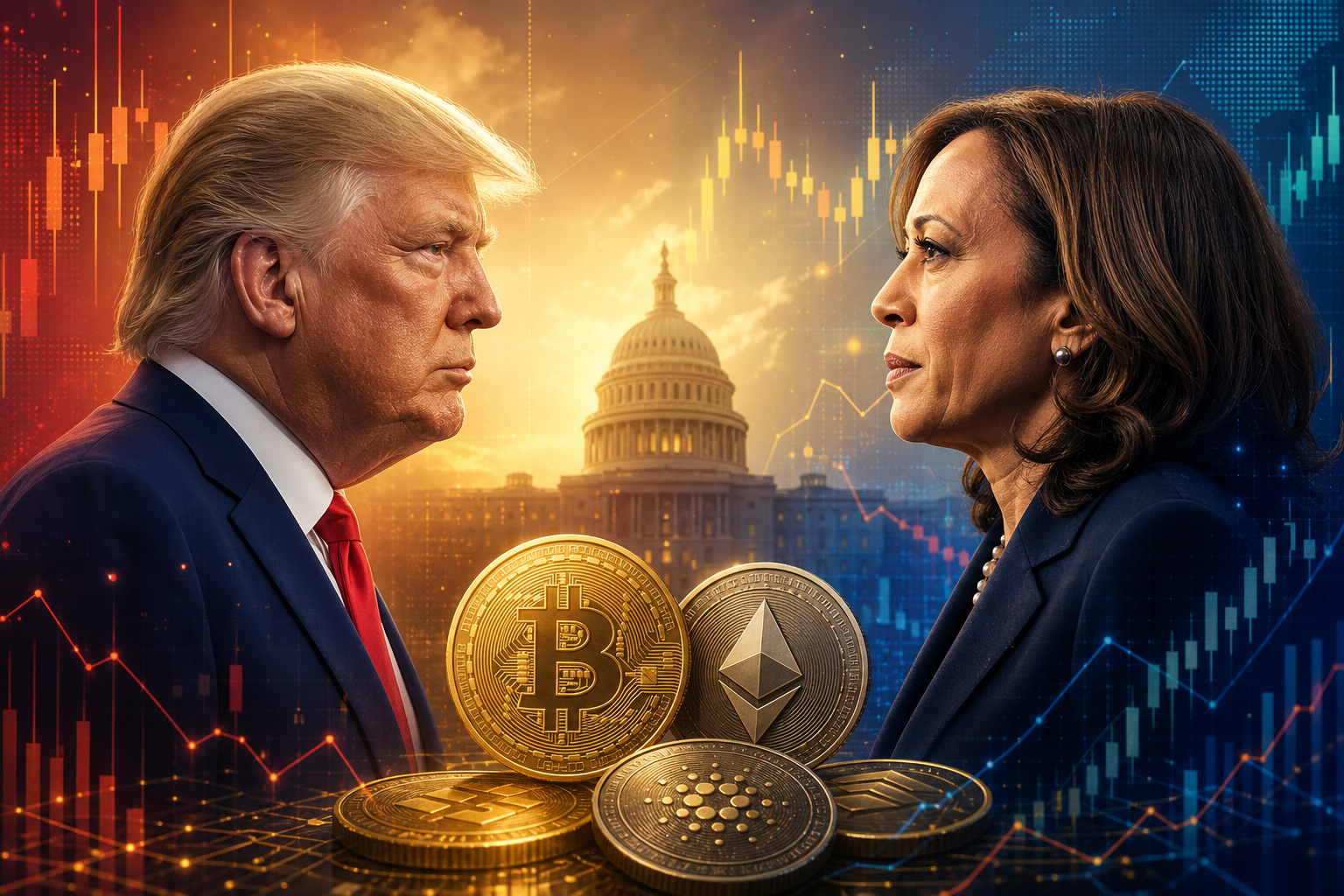
What Does Kamala Harris’ (Presumptive) Nomination Mean for Crypto This Election?
Vice President Kamala Harris has become the presumptive nominee for President of the United States for the Democratic Party, following President Joe Biden’s withdrawal from the race. This development has generated curiosity about how a potential Harris Administration might differ from the Biden Administration in its approach to cryptocurrency.
The sudden shift in the Democratic Party’s presidential nominee has had a significant impact, with large funds flowing into the campaign since Biden’s announcement. ActBlue, a fundraising service for Democrats, reported $160 million in contributions, while Harris’s campaign claimed to have received $81 million within a short period of time.
For the crypto industry, the key question is whether Harris will deviate from Biden’s stance on crypto and how she might contrast with former President Donald Trump, the Republican nominee. Although Harris has only recently become the presumptive nominee, there are signs of a potential reset. Entrepreneur Mark Cuban revealed that the Harris campaign has shown interest in crypto and other related issues. Additionally, there are discussions about the campaign potentially speaking at BTC Nashville, indicating a willingness to engage with the crypto community.
While it is still early to predict Harris’s approach to crypto, her status as the Democratic nominee suggests that the industry can expect a fresh perspective in the 2024 election. Sheila Warren, CEO of the Crypto Council for Innovation, emphasized that the industry now has a new set of cards to play with and an opportunity for a reset.
There is speculation that Harris, being from California, may be more comfortable and open to technology and related issues. Her choice of vice president will also provide insights into her approach. Several potential candidates, such as Pennsylvania Governor Josh Shapiro, North Carolina Governor Roy Cooper, Arizona Senator Mark Kelly, and Transportation Secretary Pete Buttigieg, are considered business-friendly, which could influence Harris’s stance on the crypto industry.
On the other side of the conversation, industry groups and individuals have already reached out to the Democratic Party and Harris’s campaign, expressing a desire for less hostility towards the crypto industry. Open letters have been drafted urging dialogue and collaboration to develop policies that support technological growth, while ensuring consumer protection and financial stability.
In summary, Harris’s nomination as the Democratic presidential candidate introduces the possibility of a different approach to crypto in comparison to the Biden and Trump administrations. While it is still uncertain how Harris will specifically address crypto, her background and the campaign’s interest in engaging with the industry indicate the potential for a more receptive outlook.