
















































Fed Balance Sheet Grows $11 Billion: Crypto Traders Get Another Inflation Headache
The Federal Reserve’s balance sheet grew by $11,045,000,000 in one week. Big number. Awkward timing. Fed officials are still talking tough on inflation, while crypto traders are staring at liquidity like it is the only screen that matters. My take: this is exactly the kind of mixed signal that makes Bitcoin and altcoins overreact, especially after months of trading off rate expectations, liquidity shifts, and stray Fed comments.
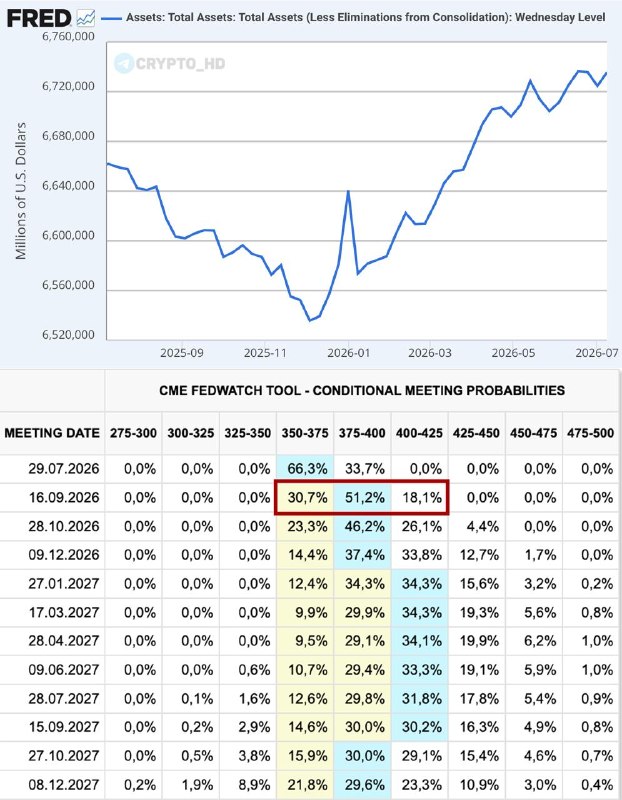
The latest Fed data shows the balance sheet rose by $11,045,000,000 over the past seven days. At the same time, Fed officials keep warning that inflation is still the main problem. Fed Chair Waller said “the main risk for the Fed now is high inflation,” and added that “the risks have completely changed, the labor market is stabilizing, and inflation is accelerating.” Most market notes treat that as standard Fed caution. That’s only half right. Jobs are no longer the Fed’s biggest worry. Inflation is. That can change the rate outlook fast.
A one week jump in the balance sheet can come from technical plumbing, not a major policy turn. Markets do not wait for the footnotes. They usually react first and read the details later. More Fed assets often mean more liquidity in the system, and liquidity has usually helped risk assets like Bitcoin and Ethereum. I’ll be honest: I would be careful with that read. Waller’s inflation comments point the other way. If the Fed thinks inflation is heating up again, it can lean against any extra liquidity with higher rates or tighter guidance. QE periods have often matched up with stronger crypto markets because investors went hunting for returns when yields were low. QT and rate hikes usually hurt. They drain money from the system and make speculative trades harder to defend. So what are traders actually looking at? A bigger balance sheet on one side, and a Fed that still sounds ready to fight inflation on the other. That is how BTC jumps one day and sells off the next, because nobody is quite sure what the Fed is really saying about balance sheet policy, inflation, and rates.
Williams made the picture even less clean. He said “inflation is still too high,” but also said lower energy prices improve the short term outlook. He expects oil prices to be near their peak and said they may fall over the next 6 to 12 months. That helps, but only up to a point. Energy is one inflation input, not the whole machine. Williams also said “the current Fed monetary policy is in the right position” and that “further decisions will depend on the data.” He added that “the decision on the July rate has not yet been made, an analysis of the situation is yet to be carried out.” Counter to the usual advice, this is not just about the next CPI print. It is about how CPI, jobs data, oil prices, and Fed language line up together. A hot CPI report could hit risk assets quickly and push BTC toward support near $60,000. A cooler print could give traders some room, though probably not a clean green light.
Rate expectations show the same nerves. Traders are pricing in a “PAUSE” for the July 29 meeting, then a 25 basis point hike on September 16, which would bring the target rate to 3.75-4.00%. The market is not saying the Fed is finished. It is saying the Fed may skip once, then hike again. That matters. The previous FOMC minutes probably helped shape that view, and for crypto the math is blunt: higher rates make capital more expensive, cash more attractive, and volatile assets harder to defend. Altcoins usually feel that pressure first. ETH could also struggle if the September hike happens, especially if bigger funds move money back into fixed income. Yes, this cuts against the simple “bigger balance sheet equals bullish crypto” take. Bear with it. The balance sheet, inflation data, and rate path are pulling crypto in different directions. Volatility is not going anywhere.
What this means
The Fed’s balance sheet grew, but Waller and Williams still sound focused on inflation. That is a rough mix for anyone hoping for a simple bullish liquidity story. A larger balance sheet can help risk assets in the short run. But if the Fed sees inflation picking up, it can push back with higher rates or tighter guidance. Is this overthinking one weekly balance sheet move? Maybe for a long-term investor. Not for a crypto market that trades hard around Fed probabilities. Crypto gets caught between the two. A short bounce is possible. A strong, lasting rally is harder to trust while another rate hike is still on the table.
Investors should keep an eye on the next CPI reports and Fed comments. I would put the rate path first, then the charts. The market’s current baseline is a “PAUSE” on July 29, followed by a 25 basis point hike on September 16 to 3.75-4.00%. If pricing moves toward more hikes, crypto probably feels it. The CME FedWatch Tool is worth checking for rate probability changes. On the chart, BTC losing $60,000 would make the correction look more serious. ETH failing to hold $3,000 would say a lot about altcoin appetite. The next FOMC meeting and press conference should give traders a better read on whether this balance sheet jump was just noise or something the market has to price in.