















































Asian Markets Lose $1.2T Capitalization, Raising Macro Flow Concerns for Crypto
Asian markets lost more than $1.2 trillion in market value in a single day. That is not background noise for crypto. I’ll be honest: when a move is that broad, I stop treating Bitcoin as a separate little island and start watching liquidity first. The sell-off followed regulatory warnings and heavy tech stock liquidations. Simple read: investors were cutting risk, and crypto usually gets dragged into that conversation.
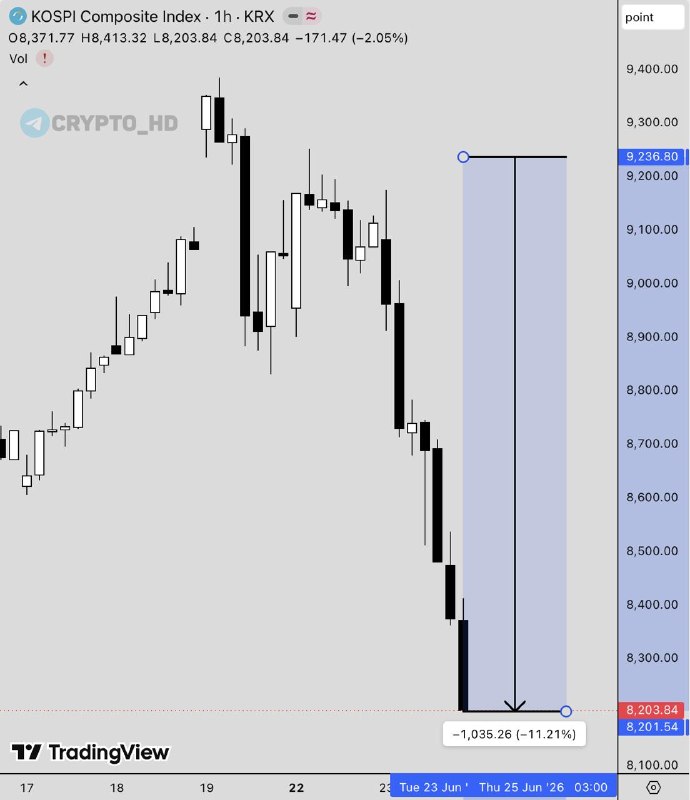
The damage was regional, not isolated. South Korea took the hardest hit, with the KOSPI down 11.2% and more than ₩800 trillion, about $580 billion, erased from the market. Tech selling did most of the work after regulators warned about overheating and risks tied to leveraged ETFs. Japan’s Nikkei fell 3.55%, wiping out roughly $170 billion. In China, the Shanghai Composite dropped 1.3% while the Shenzhen Component lost 3.0%, with combined losses above $240 billion. Hong Kong’s Hang Seng fell 2.12%, losing another ~$130 billion. India’s Nifty slipped 0.73%, or about $17 billion. Not a wobble. A reset.
Big equity drawdowns often spill into other risk assets, including crypto. Most guides say crypto trades on its own adoption cycle. That’s only half right. In stress, investors sell what they can sell, not what fits the cleanest narrative. Institutions in particular tend to reduce exposure first and think through the finer points later. My take: crypto still sits in the “higher risk” bucket for a lot of traditional capital, whether crypto people like that label or not. In March 2020, during the early COVID liquidity panic, Bitcoin fell from above $9,000 to below $5,000 in a few days, a drop of roughly 45%. BTC is more mature now, yes. But maturity does not cancel liquidity risk. A $1.2 trillion loss across Asian equities is still big enough to matter. It could add selling pressure to Bitcoin, Ethereum, Solana, and other major tokens if capital moves toward cash or bonds, or if it simply gets pulled off the table.
The South Korean warning about overheating and leveraged ETFs matters for crypto as well. Why does this matter? Because leverage is usually where regulators look first when markets start snapping. Regulators dislike leverage when markets are calm. They dislike it even more when prices start breaking. The US SEC was cautious on spot Bitcoin ETFs for years because of manipulation and investor protection concerns. Spot BTC ETFs were finally approved in January 2024, but the argument over leveraged crypto products has not disappeared. Counter to the usual crypto-market instinct, this is not only about coins. It is about the plumbing around the trade.
This Asian sell-off shows how quickly regulatory warnings can move markets. If authorities tighten rules around leveraged trading in traditional markets, crypto derivatives may end up in the same discussion. That could affect exchange volumes and funding rates. Liquidity in major tokens would matter too. Similar reactions followed CFTC actions against crypto derivatives platforms, with BTC and ETH prices moving fast as traders repositioned. We have seen enough of these episodes to know the order: warning first, de-risking second, explanations later.
What this means
The outflow from Asian equities points to weaker risk appetite. Bad for crypto near term. The scale of the losses, especially in tech-heavy South Korea, suggests investors are cutting growth exposure rather than calmly rotating from one trade into another. Is this overkill for crypto traders to watch? No, not when the pressure starts in tech-heavy markets and then tests cross-asset liquidity. Bitcoin and Ethereum could cool off from here, and traders should be ready for wider intraday swings. If institutional capital keeps moving away from risk, spot markets and derivatives markets will both feel it.
Watch US tech indices next, especially the Nasdaq, because stress in Asian tech markets often shows up there too. The next FOMC meeting also matters, especially if the Fed sounds hawkish and global liquidity tightens further. For Bitcoin, the $60,000 area is the level I would keep on the screen. A clean break below it could bring in more selling. For Ethereum, $3,000 is the obvious line. Yes, this slightly contradicts the idea that crypto has matured away from macro shocks. Bear with me: mature markets can still trade like risk assets when liquidity gets squeezed. Also watch for new statements from major Asian regulators on leveraged products or market stability. If those warnings keep coming, crypto will not stay cleanly outside the blast zone.