
















































Jito’s JTO buyback and burn gives holders a real supply story
Jito has announced a JTO buyback and burn program. Here is the short version: for at least one year, all JTX fees go toward buying JTO, and those tokens get burned. My take: that finally gives JTO a supply story people can actually check inside the Solana ecosystem.
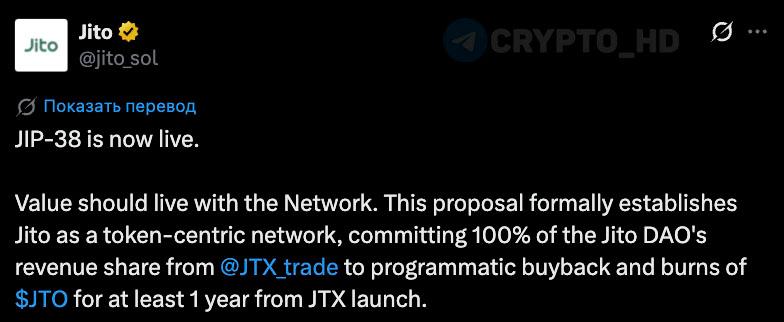
The setup is blunt. JTX earns fees. Jito buys JTO. The purchased JTO leaves circulation. Simple enough. But for traders, this is not cosmetic tokenomics. It changes the supply math. If demand stays flat, lower supply can still matter. If demand rises, the setup gets sharper. Most guides treat burns like magic. That is only half right. A burn only bites when the protocol is producing enough revenue for the market to notice.
The timing is not clean. Maybe that is the point. Crypto is still dealing with macro pressure, and the Federal Reserve has kept rates high while inflation remains a concern. That makes risk assets harder to love. Bitcoin recently traded around $61.4K, but altcoin flows are pickier now. Why does this matter? Because money usually moves toward tokens with a specific reason to be held, not just a familiar logo. A fee funded burn gives JTO one of those reasons, especially if liquidity stays tight and traders keep looking for assets where usage connects directly to token value.
There is a Solana angle too. When a protocol sends revenue back into its token, holders notice. I do, anyway. It signals that the team is willing to tie protocol activity to token economics instead of asking the market to run on vibes. That matters more with the SEC and CFTC still watching big parts of crypto. A public promise to route all JTX fees into JTO buybacks for at least a year is easy to track. Is that a full regulatory answer? No. But clean mechanics help, and crypto still underrates them.
This is not only a JTO story. Other Solana and DeFi teams will watch the result closely. If the program supports JTO’s price, copycats will show up fast. They always do. Counter to the usual advice, though, the announcement itself is not the thing to watch. The hard part is JTX fee generation. A burn program sounds good on paper. It only matters when the fees are large enough to shrink supply in a way traders can see.
What this means
Jito is giving JTO a more direct value capture model. Instead of vague promises about future growth, the program connects JTX activity to JTO buybacks and burns for at least one year. That makes JTO easier to judge. The question is no longer just “Do people like Jito?” It is “How much fee revenue can JTX produce, and how much JTO can that remove from circulation?” That is the better question. I’ll be honest: it is also the harder one.
Investors should watch JTX volume and fee revenue first. Skip the slogan. Those numbers drive the whole program. If activity rises for several quarters, the burn could start to matter. If fees stay thin, the announcement will not age well. JTO’s performance against other Solana tokens is worth tracking too, because real outperformance would suggest the market is pricing in the buyback. Yes, this sounds less exciting than the headline. That is the point. Execution matters: when tokens are bought, how much gets burned, and whether Jito sticks to the full fee commitment. The next few quarters should show whether this puts real pressure on supply or just becomes another nice sounding tokenomics headline.