
















































Securitize tokenized stocks launch tests crypto’s real-world asset trade
Securitize tokenized stocks are blockchain-based versions of stock exposure. Plain English: they could let people trade stock-like products through crypto rails instead of the usual brokerage path. Securitize, Jump Trading and Jupiter have announced a service for trading tokenized equities, which moves this from pitch-deck language toward something closer to a working market. I’ll be honest: the missing details are doing a lot of work here. The source post did not give a launch date, pricing, supported tickers or eligible countries. That is not a small omission. Still, tokenized stocks crypto now looks less like theory and more like market plumbing.
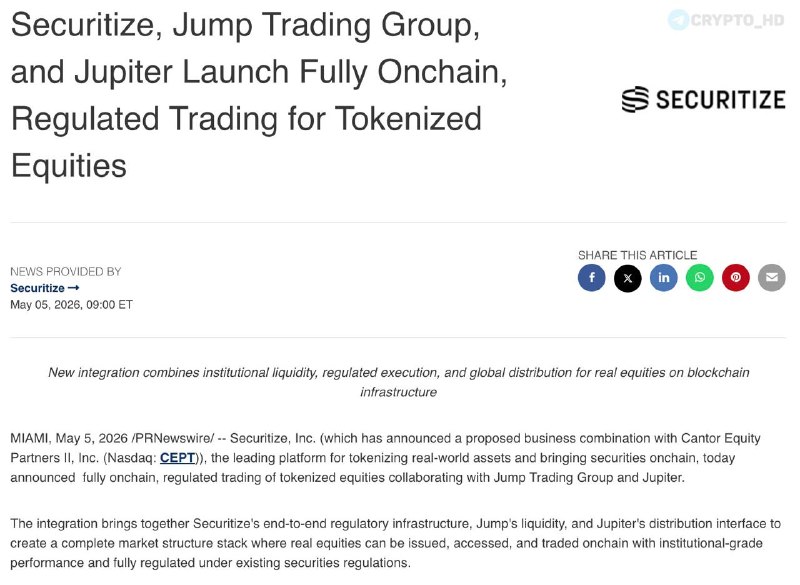
The confirmed fact is simple. Securitize is working with market maker Jump Trading and Jupiter on a tokenized stock platform. The source post describes Securitize as a BlackRock partner. The roles are fairly easy to map: Securitize handles the regulated asset wrapper, Jump Trading brings liquidity and market making. Jupiter gives the product a crypto trading front door. Clean enough.
For investors, the main signal is adoption. Tokenized equities sit in the same real-world asset bucket that brought tokenized Treasuries and tokenized funds onto crypto desks in 2023 and 2024. Most guides would frame this as bullish for all of crypto. That is only half right. I would not call this automatically bullish for BTC or ETH. That feels too easy. What it shows is narrower but more important: crypto rails are being tested for mainstream financial assets, not only speculative tokens.
The market story comes down to liquidity. It usually does. Why does this matter? Because a tokenized stock with thin books is just a wrapper with a ticker. If tokenized stocks trade with tighter spreads and real depth, traders may start treating them like on-chain collateral instead of shiny wrappers. That could send more activity toward DEX infrastructure and venues connected to Jupiter. My take: Jump Trading is the more important signal than the headline itself.
Regulation is the part traders should not wave away. SEC staff have said that tokenizing a security can change its format or recordkeeping, but not necessarily what it is under the law. Tokenized stocks are still securities-shaped products, even if they sit inside crypto interfaces. SEC rules, exchange rules, broker-dealer requirements and custody obligations matter more here than meme-coin liquidity or BTC dominance. Counter to the usual crypto-market read, the legal wrapper may matter more than the chart in the first few weeks. The source post names no regulator, license, country, supported exchange or compliance setup.
That gap is the trade. The announcement shows institutional interest, but the market impact depends on what lists, where it lists, and who is allowed in. A tokenized Apple share would land differently from a tokenized Tesla share. Both would land very differently from a restricted product available only to a small permissioned group. For now, the hard facts are Securitize, Jump Trading and Jupiter. Everything else is still pending.
What this means
The Securitize, Jump Trading and Jupiter plan means tokenized equities are getting closer to real trading infrastructure. It also shows the real-world asset trade moving beyond tokenized bonds and funds into equities. For crypto markets, BTC is probably not the first place to look. The more obvious area is infrastructure: DEX routing, market making, custody and settlement. Protocols tied to tokenized stock trading matter too. If Jupiter becomes a real access point, traders will watch whether that activity appears in protocol volume and demand around its ecosystem.
The next details matter more than the announcement headline: launch date, stock tickers, eligible users, country access, settlement model and regulatory disclosures. Yes, this sounds like a boring checklist. It is also where the trade lives. SEC staff have said tokenized securities can use issuer-sponsored or third party sponsored structures, so the product design will affect investor rights, custody risk and compliance. Is this overkill? For a product tied to securities, no. On the market side, watch BTC and ETH liquidity during the first trading window, plus Jupiter volume if the service goes live. The useful signal is not a price level yet. It is whether real order flow shows up after launch.
FAQ
What are Securitize tokenized stocks?
Securitize tokenized stocks are planned tokenized equity products tied to a platform involving Securitize, Jump Trading and Jupiter. They would give users stock-related exposure through crypto market infrastructure.
Who is involved in the tokenized stock platform?
The confirmed names are Securitize, Jump Trading and Jupiter. Securitize provides tokenization infrastructure, Jump Trading provides market making, and Jupiter provides crypto trading distribution.
Did the announcement include a launch date?
No. The source post did not include a launch date, pricing, supported tickers, supported jurisdictions or a detailed compliance framework.
Are tokenized stocks securities?
According to SEC staff statements on tokenized securities, tokenized securities remain securities when the underlying instrument is a security. Tokenization changes the format and recordkeeping method, not necessarily the legal treatment.
Why does Jump Trading matter?
Jump Trading matters because tokenized stocks need liquidity and tighter spreads to trade well. Its role suggests the platform is being built for active trading, not just passive token issuance.
Why does Jupiter matter?
Jupiter matters because it is a crypto trading and routing venue. If the service goes live through Jupiter, traders will watch whether tokenized stock activity lifts Jupiter-related volume and ecosystem demand.
Is this bullish for Bitcoin or Ethereum?
The announcement is not directly bullish for BTC or ETH by itself. The cleaner read is infrastructure: liquidity venues, custody systems and real-world asset trading rails.
What should traders watch next?
Traders should watch for launch timing, eligible users, supported stocks, country access, settlement design and regulatory disclosures. The main market signal will be whether real order flow appears after launch.