
















































CryptoQuant CEO: Altcoin Rotation May Be Breaking Down
The old Bitcoin-to-altcoin trade may be losing its edge. For years, traders treated the cycle like a script: Bitcoin (BTC) runs first, altcoins follow later. CryptoQuant CEO Ki Young Ju thinks that pattern may be fading. My take: if he is right, the usual “BTC up, alts next” trade is not just weaker. It may be the wrong map.
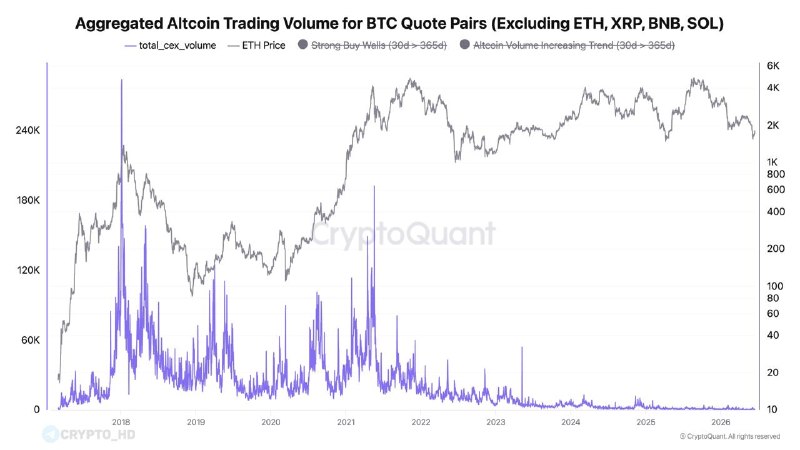
Capital does not seem to be moving from BTC into altcoins the way it used to. Ki’s warning, shared through a wire/TG news post, was blunt. In past cycles, BTC would rally, cool off, and then money would spill into smaller coins. That trade produced some wild altcoin seasons. It also made plenty of people lazy, honestly. The playbook had one step: wait for Bitcoin to move, then chase alts. Simple. Maybe too simple.
Ki wrote: “Эра «альткоины растут просто потому, что растёт BTC» может быть окончена… Ротация активов из BTC в альткоины, которая когда-то подпитывала сезоны альткоинов, по сути исчезла.” In English, he is saying the era when altcoins rise just because BTC rises may be over, and the BTC-to-altcoin rotation that once powered alt seasons has basically disappeared. His phrase “скука убивает” (“boredom kills”) lands, too. Why does that matter? Because a bored market is often a selective market, not a generous one.
Macro pressure now matters more for altcoins than many traders want to admit. Most cycle guides still start with BTC dominance and end with alt season. That is only half right. The Federal Reserve’s inflation fight and rate policy still affect demand for risk assets, and when rates stay high, investors usually get pickier. Altcoins tend to take the hit first. BTC can still attract money as the larger, more liquid crypto asset, while smaller coins get left alone.
That is the uncomfortable part. Even if BTC holds up, or retests support near $61.4K, altcoins may not follow. A few years ago, that would have sounded odd. Now it feels normal. I will be honest: this is where a lot of old crypto muscle memory breaks. If capital is reacting more to rates, liquidity, and risk appetite than to crypto rotation, BTC strength alone may not save the rest of the market.
If rotation is gone, safety money may be staying in Bitcoin. BTC is often called digital gold during stressful markets. I would not lean too hard on that comparison, but traders have treated it that way at times. In March 2020, during the early COVID-19 panic, Bitcoin sold off hard and then recovered quickly. That rebound helped build the view that BTC could survive shocks better than most crypto assets.
Altcoins are different. Counter to the usual advice, a Bitcoin rally may now be a warning sign for weaker tokens, not a green light. If they no longer get a lift from Bitcoin rallies, they look less like part of a broad crypto rebound and more like straight risk bets. That matters. In a nervous market, capital may pile into BTC instead of spreading across the long tail of tokens. BTC dominance could stay firm or even rise while many altcoins drift sideways. Boring, yes. Painful, too.
What this means
Altcoins may have to earn attention instead of borrowing it from Bitcoin. Ki’s point is that the market is getting more selective. That sounds obvious, but it changes the trade. A coin may need real usage, revenue, strong token demand, a clear catalyst, or simply better timing before money shows up. “Bitcoin is pumping” may not be enough anymore. We have seen this pattern before in smaller bursts: one token runs, five adjacent names do nothing.
This could make the market messier. Some projects may still rip. Others may sit there for months. Yes, this contradicts the old alt-season script. Bear with me. The gap will depend on the project and the narrative. Liquidity matters too. So does timing. The lazy version of altcoin season, where nearly everything moves together, may be harder to find.
BTC dominance, correlations, and macro data are worth watching. If BTC dominance keeps rising while altcoins stall during Bitcoin rallies, Ki’s argument gets stronger. The $61.4K BTC level also belongs on the chart, since a clean break below it could signal broader weakness. Is this overkill? For traders still using the old rotation model, no.
Macro releases matter here too. Inflation reports and Federal Reserve rate decisions can change risk appetite quickly. A softer inflation print or friendlier Fed tone could bring buyers back into altcoins, but probably not with the same blind enthusiasm from earlier cycles. The market feels less forgiving now. My read: traders may still get altcoin rallies, just not the easy version where everything goes up together.