
















































US Strikes Iran Ports Crypto Market Impact: Bitcoin Faces 72-Hour Safe-Haven Test
US strikes on the Iranian ports of Kheshm and Bandar Abbas are the kind of geopolitical jolt that has, in past cycles, pushed Bitcoin 4-8% within three trading days. Where it lands this time comes down to one thing: whether traders read the official “not a resumption of war” line as a real ceiling, or as cover before the next move. US forces just hit Kheshm and Bandar Abbas. Crypto desks should care. Middle East flare-ups have shoved BTC 4-8% either way inside three trading days before, and this one has the same ugly setup: a hard military headline, then an instant attempt to soften it. FOX News had the strikes first. A US official then told press this is “not a resumption of war.” I’ll be honest: that phrase may calm cable-news panels faster than it calms a levered BTC book. The space between the strike and the walk-back is where volatility lives. It works.
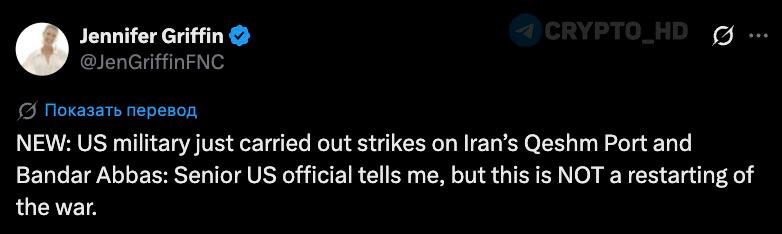
Why the two targets matter? Because these are not random dots on a map. Bandar Abbas handles roughly 70% of Iran’s container traffic, per Iranian port authority data cited in maritime trade reports. Kheshm sits at the mouth of the Strait of Hormuz, the chokepoint where about 20% of global oil supply moves through. No casualty figures yet. No second tranche announced. No formal Pentagon statement backing the official’s denial. That is the confirmed picture. Thin, but enough to move risk before Asia opens.
Safe-haven angle. Bitcoin tends to pick one of two lanes during Middle East shocks: it either trades like a risk asset and sells off with equities, or like digital gold and rallies with XAU. Most guides say Middle East shock equals gold up, dollar up, oil up, equities down. That’s only half right once BTC enters the frame. Bitcoin behaved like a risk asset during the 2024 Israel-Iran exchanges, then looked more like digital gold after the January 2020 Soleimani strike, when BTC gained roughly 8% in the week that followed. My take: the market will not decide this from the headline alone. It will decide from whether desks treat “not a resumption” as a ceiling or as diplomatic padding before round two. Watch BTC against gold over the next 48 hours. If gold rips and BTC fades, institutional flows are calling this risk-off. Believe the tape.
Macro flow angle. Strikes on Iranian export infrastructure put a bid under oil, push inflation expectations higher, and shove Fed rate cuts further out. That last bit has been the single best predictor of BTC drawdowns over the last eighteen months. Hits on Iranian export infrastructure put a floor under crude. Crude feeds inflation expectations. Inflation expectations feed the Fed path. The Fed path feeds crypto liquidity. Counter to the usual advice, the first BTC chart to watch may not be BTC at all; it may be oil holding a bid into the weekly close. Stickier oil means stickier CPI, which means the rate-cut path gets pushed out, and per several macro research desks, rate-cut delays have been the cleanest leading indicator of BTC drawdowns over the past eighteen months. ETH trades with a higher beta to liquidity than BTC, so it usually absorbs that compression first. If crude stays firm, ETH/BTC probably leaks lower before either leg repairs.
Worth saying out loud: that “not a resumption of war” line is doing absurdly heavy lifting. Markets are being asked to price an actual strike as a contained signal, not the opening move of a campaign. That’s a narrow ledge. Is that too cautious? No, because one second wave, one Iranian response, or one Hormuz shipping disruption changes the whole frame in minutes. We have seen this movie in other geopolitical tapes: the first headline moves price, but the second headline decides whether the move sticks. The crypto reaction would not be subtle.
What this means
The first crypto reaction will look like ambiguity, not direction. Expect a sharp spike in BTC implied volatility, a wider perpetual futures basis, and funding rates whipping back and forth as leveraged positions get flushed and reset. Right now this reads like a one-off signal, not war footing. Yes, this contradicts the instinct to demand a clean directional call; bear with me. The first move in crypto should be messy: BTC implied vol jumps, perp basis widens, funding flips around, levered longs get cleared, then rebuilt. Per derivatives analysts, the cleanest read on whether the market buys the de-escalation story is BTC/gold and ETH/BTC. If both hold, this gets digested in a session. If both crack, the safe-haven bid is real, and BTC can run on geopolitical premium alone. Messy first. Direction second.
Three indicators will define the next 72 hours: any Iranian response or Hormuz shipping advisory, the CME Bitcoin futures Sunday open, and how BTC reacts at last week’s range high. I would watch four things, not three in practice, even though the headline set is still the same. First: any Iranian response. Second: any shipping advisory affecting Hormuz traffic. That is the binary trigger for a sustained move. Third: the next CME Bitcoin futures open Sunday evening US time, where the gap shows what institutional desks decided over the weekend. Fourth: the technical reaction at the prior week’s range high. That level separates “buy the geopolitical dip” from “this is a risk-off tape.” Until the Pentagon clarifies scope or Tehran answers back, I’d treat any sharp rip as untrustworthy and any flush as opportunistic. The headline risk hasn’t cleared. It’s just paused.