
















































Roaring Kitty hack speculation tests crypto meme risk
Roaring Kitty hack speculation has the market stuck on one blunt question: is the activity around the Roaring Kitty persona real, hacked, or being stretched by traders who wanted an excuse to buy anyway? The chatter picked up again after rasmr said the account behavior “is definitely a hack” and noted that Roaring Kitty “never tweets words.” I’ll be honest: that last detail is exactly the kind of tiny pattern traders overvalue until it suddenly matters. For crypto, this is not only about one post. It is about how fast meme liquidity can move when a single social signal hits a market built on attention, leverage, and reflex buying. Fast money moves fast. Sometimes too fast.
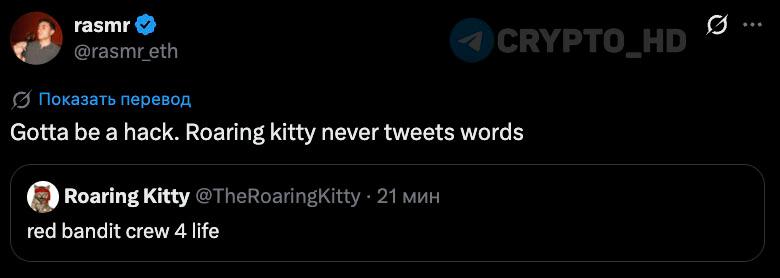
The source gives two firm details: rasmr called the activity a likely hack, and an earlier note said “Roaring Kitty returned.” It does not give a ticker, price, date, wallet, exchange, or on chain transaction. Thin file. Big reaction. Why does that matter? Because crypto markets often trade the screenshot before anyone checks the source. Most guides say to wait for confirmation. That’s only half right; in meme markets, the first tradable move often happens before confirmation even exists. When Roaring Kitty, GameStop style speculation, and meme assets show up in the same sentence, the missing details are not a footnote. They are the story.
The Jan. 9, 2024 SEC X account incident is the obvious comparison. According to the SEC’s public record, its X account was compromised before a false spot Bitcoin ETF approval post went out. BTC jumped, then reversed, before the real approvals arrived on Jan. 10, 2024. My take: that episode changed the job description for anyone trading headline-sensitive crypto. Account authenticity became market structure, not housekeeping. The same issue sits under roaring kitty crypto narratives. BTC, ETH, and meme linked tokens can move before anyone knows whether the source is real.
The first crypto angle is market flow. A Roaring Kitty related signal can shake risk appetite even though Roaring Kitty is not a macro figure. Counter to the usual advice, the problem is not always that traders believe the post. Sometimes they only believe other people will believe it for 90 seconds. In a risk on tape, traders reach for meme coins, high beta altcoins, COIN, then small cap crypto equities. In a risk off tape, those same names usually get sold first. So yes, a vague Roaring Kitty signal can matter more when BTC is near a round number like $60,000 or $70,000. Is that a thesis? No. Leveraged traders may treat social momentum as a trigger, not a thesis. I would not call that investing. It is closer to reflex.
The second crypto angle is regulation. Suspected fake posts can create manipulation risk if they move order books before anyone verifies them. The SEC’s market integrity mandate and the CFTC’s anti manipulation framework already cover misleading promotion and market manipulation. They also cover trading that distorts fair pricing. The Jan. 9, 2024 SEC account incident showed how quickly an official or influential account can move markets. Yes, this sounds like a repeat of the first point. It is not. Market flow explains the candle; regulation explains who gets questioned after the candle. If a roaring kitty meme coin or roaring kitty solana token rallies on a suspected fake post, regulators do not need a new theory to care. Centralized venues, token issuers, promoters, and loud accounts all get pulled into the mess once social posts start driving trades.
The cleaner read is caution. The source has no confirmed quote from Roaring Kitty himself, no denial, and no authentication trail. I would treat rasmr’s “definitely a hack” claim as an alert, not proof. That sounds boring. It works. In crypto, that difference can get expensive fast. The first candle often rewards speed. The second one punishes people who confused virality with confirmation.
What this means
This event shows that attention driven trading is still a real crypto market risk in 2026, especially where meme culture meets leverage. BTC and ETH are not named in the source. No token is named either. Still, they frame the risk because they set the mood for everything else. Why bring them in at all? Because when BTC is near a major round level like $60,000 or $70,000, fake account speculation can worsen liquidations and push capital into meme assets before fundamentals get a chance to matter. We tried ignoring that kind of social spark in prior cycles. It broke.
The market needs verification first. Not vibes. A verified Roaring Kitty follow up, platform security update, or clear denial would matter more than another repost. The next things to watch are BTC liquidity around major technical levels and COIN as a proxy for U.S. crypto risk appetite. Add CME futures positioning after the next weekly close. Then watch the June 16-17, 2026 FOMC meeting. Rate expectations could decide whether meme driven risk gets more fuel or runs out of air.